

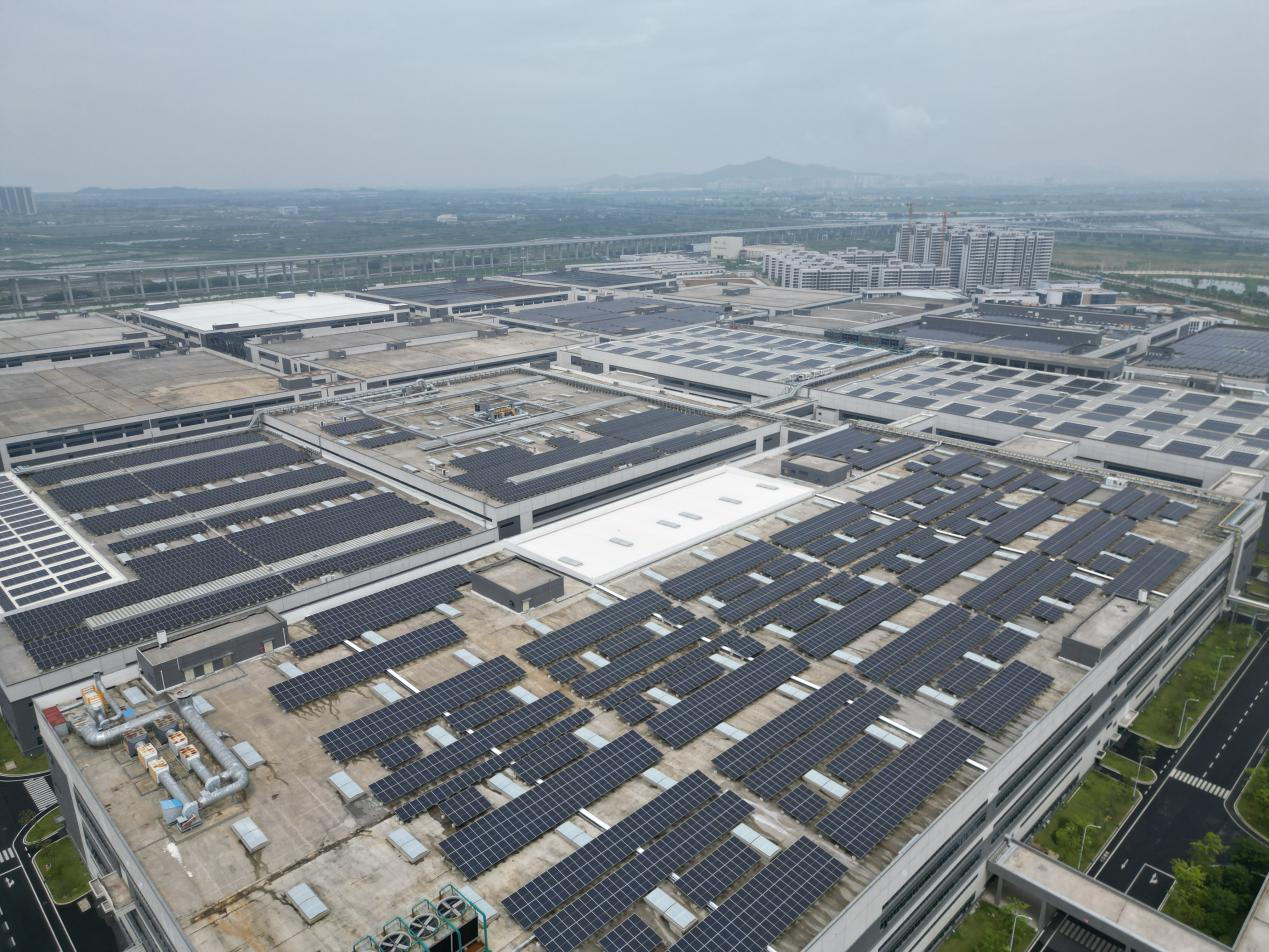
According to a joint forecast by the German Solar Industry Association, the European Solar Energy Association, and other organizations, global installed solar power capacity is expected to exceed 600 GW in 2025, doubling the 2022 figure. Amid this wave of growth, China continues to consolidate its global leadership. In 2024, China alone will add 329 GW of solar power, bringing the country’s cumulative installed photovoltaic capacity to approximately 1.1 GW, a year-on-year increase of 54.1%.
China’s photovoltaic manufacturing industry holds an absolute dominant position in the global supply chain. By 2025, China’s polysilicon, wafer, and cell production capacity will account for 90%-95% of the world’s total, and its module production capacity will account for 83%, establishing a significant cluster advantage. PV module production capacity will continue to expand, reaching 1,156.5 GW in 2024, a year-on-year increase of 25.7%. China’s photovoltaic module production capacity is expected to reach 1,445.6 GW, with output reaching 753 GW by 2025.
The development logic of the photovoltaic industry is undergoing profound change. With the full integration of new energy into electricity market reforms, companies are no longer solely focused on volume, but are instead seeking a new balance and growth drivers through technological iteration, market development, and business diversification. Photovoltaics have evolved from a simple power source to a hub connecting energy production, storage, and consumption, expanding from a single grid-connected power generation model to a diversified off-grid and on-grid power supply model.
Despite sustained rapid growth, the photovoltaic industry continues to face challenges such as overcapacity, trade barriers, and raw material fluctuations. From January to May 2025, my country’s total photovoltaic product exports reached US$11.059 billion, a year-on-year decrease of 27.7%. From a regional perspective, the Asian market remained stable, dominating with US$5.747 billion in exports.
Over the next five years, the industry will face the triple challenges of capacity clearance, technological differentiation, and global expansion. However, emerging areas such as integrated photovoltaic storage and charging, flexible electronics integration, and space energy development are injecting long-term growth momentum into the market. The new coordinates that China’s photovoltaic industry has established in the history of global new energy development not only witness the rise of an industry, but also indicate that the arrival of a zero-carbon future is irreversible.


Add comment