

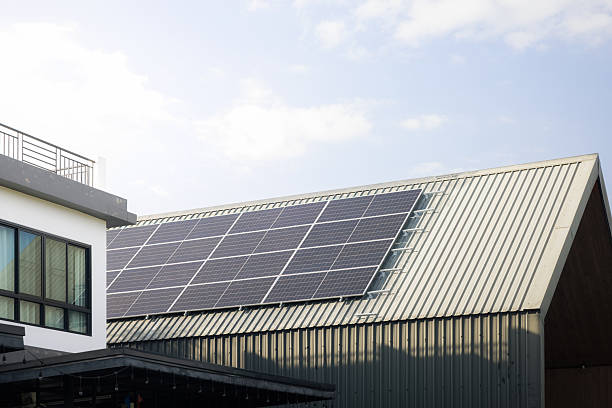
How to Scale Off-Grid Energy Storage Systems
Off-grid energy storage solutions provide reliable electricity for homes, commercial facilities, remote industrial sites, and microgrids without dependable access to the utility grid. By integrating solar PV, battery storage, inverters, backup generators, and energy management systems (EMS), these solutions help maintain power availability and optimize energy use.
However, scaling an off-grid system from 1 kW to 100 MW requires more than adding solar panels and batteries. Each application demands a suitable electrical architecture, inverter configuration, battery system, and monitoring strategy.
For B2B buyers and project developers, understanding these differences helps reduce system losses, control installation costs, and improve operational reliability.
This guide compares residential, commercial, and industrial off-grid energy storage solutions by power scale, system architecture, backup power, and monitoring requirements.
1. Off-Grid Energy Storage Solutions: System Configuration Comparison
| Parameter | Residential Systems | Commercial Systems | Industrial Microgrids |
|---|---|---|---|
| Typical power range | 1–10 kW | 10–500 kW | 500 kW–100 MW |
| Battery architecture | Commonly 48 V nominal low-voltage systems | High-voltage or modular battery systems | Modular, containerized battery energy storage systems (BESS) |
| Inverter configuration | Single-phase or split-phase | Three-phase | Modular power conversion systems (PCS) |
| AC distribution | Residential voltage | Commonly 400 V or 480 V three-phase, depending on region | Low- or medium-voltage distribution with suitable transformers |
| Battery technology | Commonly lithium iron phosphate (LFP) | LFP or other application-suitable chemistries | Containerized LFP or other engineered battery systems |
| Backup power | Optional residential generator | Automatic-start generator where required | Multiple generators, renewable sources, and coordinated storage |
| Monitoring | Mobile app or local display | Remote monitoring and facility controls | Industrial EMS, SCADA, and microgrid controllers |
| Primary design priority | Simplicity and household reliability | Load management and operational efficiency | System stability, protection, redundancy, and coordinated dispatch |
These ranges are illustrative rather than universal equipment standards. Actual configurations depend on regional electrical requirements, load characteristics, battery capacity, and project specifications.
2. Residential Off-Grid Energy Storage: 1–10 kW
Residential systems prioritize installation simplicity, safe operation, and dependable power for everyday household loads.
A typical configuration includes:
- Solar PV panels
- A battery bank, often using 48 V nominal LFP batteries
- An off-grid inverter with integrated or external solar charge control
- Household loads and optional backup generation
A simplified system architecture is:
Solar PV → Charge Controller / Hybrid Inverter → Battery Storage → Household Loads
A 48 V battery system can suit smaller residential installations, although some systems use high-voltage batteries depending on the inverter design.
When selecting a residential off-grid energy storage solution, buyers should evaluate daily electricity consumption, peak loads, battery autonomy, and motor starting requirements. Refrigerators, pumps, and air conditioners may require additional inverter surge capacity.
The goal is to balance usable battery capacity, solar generation, and backup power without oversizing the system.
3. Commercial Off-Grid Energy Storage: 10–500 kW
Commercial applications require greater power capacity and more sophisticated load management. Typical users include hotels, farms, workshops, remote facilities, and small industrial operations.
A commercial system may integrate:
- Modular high-voltage or low-voltage battery storage
- Three-phase inverters
- Solar PV arrays
- Automatic-start backup generators
- Remote monitoring and programmable control systems
A typical architecture is:
Solar PV + Battery Storage + Backup Generator → Three-Phase Power System → Commercial Loads
Higher-voltage battery architectures can reduce DC for a given power level, helping lower cable losses and conductor requirements when the system is properly designed. However, voltage selection must also account for equipment compatibility, insulation, protection, and electrical safety.
Commercial systems may use EMS or programmable logic controllers (PLCs) to coordinate battery charging, generator operation, and load management.
For facilities with pumps, chillers, compressors, or other motor-driven equipment, engineers should verify inverter overload capability and starting performance. They should also assess whether the system can support critical loads during periods of low solar generation.
4. Industrial Off-Grid Energy Storage: 500 kW–100 MW
Industrial off-grid energy storage solutions support applications with large, continuous, or mission-critical electricity demands. Examples include remote mining operations, industrial processing facilities, isolated communities, and large renewable-powered microgrids.
At this scale, the system becomes an integrated power network rather than a simple battery installation.
Key System Components
Containerized battery energy storage systems (BESS)
Modular battery containers provide scalable energy capacity. Liquid cooling may be used where required by battery design, operating conditions, and thermal management targets.
Power conversion systems (PCS)
PCS units convert DC battery power into AC power and manage charging and discharging. Their grid-forming or grid-following capabilities must match the microgrid’s operating strategy.
Medium-voltage distribution
Transformers connect power conversion equipment to distribution networks where appropriate. Industrial systems may use medium-voltage buses, with voltage levels selected according to site requirements and network design.
Energy management system (EMS)
The EMS coordinates battery dispatch, renewable generation, generator operation, load priorities, and system operating limits.
A simplified industrial architecture is:
Solar PV + Wind + Battery BESS + Generators → PCS and Transformers → Industrial Distribution Network → Plant Loads
Depending on the project, the system may also require protection relays, synchronization controls, redundant communications, fire protection, and black-start capability.
For industrial buyers, the priority is to design an integrated system that meets power demand, energy duration, reliability targets, and maintenance requirements.
5. How Many BESS Units Are Needed for a 100 MW Off-Grid System?
A 100 MW system generally requires multiple power conversion units and coordinated energy storage blocks rather than a single 100 MW inverter.
For example, a hypothetical 100 MW installation could use:
| Illustrative PCS Rating | Number of Units for 100 MW |
|---|---|
| 2.5 MW | 40 |
| 5 MW | 20 |
| 10 MW | 10 |
These figures represent arithmetic examples of aggregate rated power, not a recommended equipment layout. Actual designs must account for auxiliary consumption, redundancy, operating limits, and reserve capacity.
Battery energy capacity is a separate specification. A 100 MW system designed for four hours of discharge would require approximately 400 MWh of nominal deliverable energy before accounting for system losses, operating reserves, and usable-capacity limits.
A large off-grid microgrid also requires coordinated controls. Depending on the design, a microgrid controller can manage active and reactive power, synchronize generators, maintain frequency and voltage, and coordinate system recovery after an outage.
Important: Grid-forming controls can establish the microgrid’s voltage and frequency reference, but inverter fault-current capability is limited by equipment design. Protection coordination must therefore be engineered for the complete network.
6. How EMS and Remote Monitoring Requirements Change with System Size
Monitoring becomes more important as the number of assets, operating risks, and control interactions increases.
| System Scale | Monitoring Requirements | Key Functions |
|---|---|---|
| Residential | Mobile app or local display | Battery state of charge, solar generation, household consumption, alarms |
| Commercial | Remote monitoring, PLC, or facility management integration | Load management, generator status, battery performance, fault alerts |
| Industrial | EMS, SCADA, and microgrid controller | Coordinated dispatch, system protection interfaces, renewable forecasting, power quality, and operational reporting |
For residential users, clear energy data and basic alarms may be sufficient.
Commercial facilities often need additional visibility into peak demand, generator availability, and critical-load operation.
Industrial microgrids require a more comprehensive approach. Depending on project complexity, the control platform may need local autonomous operation, redundant communications, detailed event records, and coordinated control of multiple generation sources.
The appropriate monitoring architecture should match operational requirements rather than system capacity alone.
7. How to Select the Right Off-Grid Energy Storage Solution
Before choosing equipment, B2B buyers and project developers should assess five factors.
1. Load profile and peak demand
Calculate daily energy consumption, maximum simultaneous demand, motor starting loads, and critical-load requirements.
2. Required backup duration
Define how long the system must operate without solar or other renewable generation. This determines the required usable battery energy capacity.
3. Power conversion architecture
Select inverter or PCS ratings, AC output voltage, phase configuration, and battery voltage according to the required loads and electrical standards.
4. Renewable and generator integration
Evaluate solar resource availability, seasonal variability, generator operating strategy, and fuel logistics where applicable.
5. Monitoring and reliability
Specify EMS functions, remote access, protection coordination, redundancy, and maintenance support based on the consequences of power interruption.
These factors provide a stronger basis for equipment selection than power rating alone.
Conclusion: Scale Off-Grid Energy Storage Around Real Project Requirements
Successful off-grid energy storage solutions match system architecture to the application’s power demand, energy duration, and operating environment.
Residential systems typically prioritize simplicity and household reliability. Commercial installations require more advanced load management and three-phase power integration. Industrial microgrids depend on modular BESS, coordinated PCS units, appropriate distribution infrastructure, and integrated EMS controls.
By evaluating power capacity, battery energy, inverter performance, backup generation, and monitoring requirements together, project developers can build a system suited to their actual operating needs.
Explore Huatao Off-Grid Energy Storage Solutions
Huatao provides solar and energy storage solutions for different application requirements. Visit the Huatao Off-Grid Solution page to explore system options.
Contact our team to discuss project power requirements, battery capacity, inverter configuration, and customized system design for your residential, commercial, or industrial application.

Add comment